When the Machines Start Talking Back
What AI Is Teaching Us About Being Human

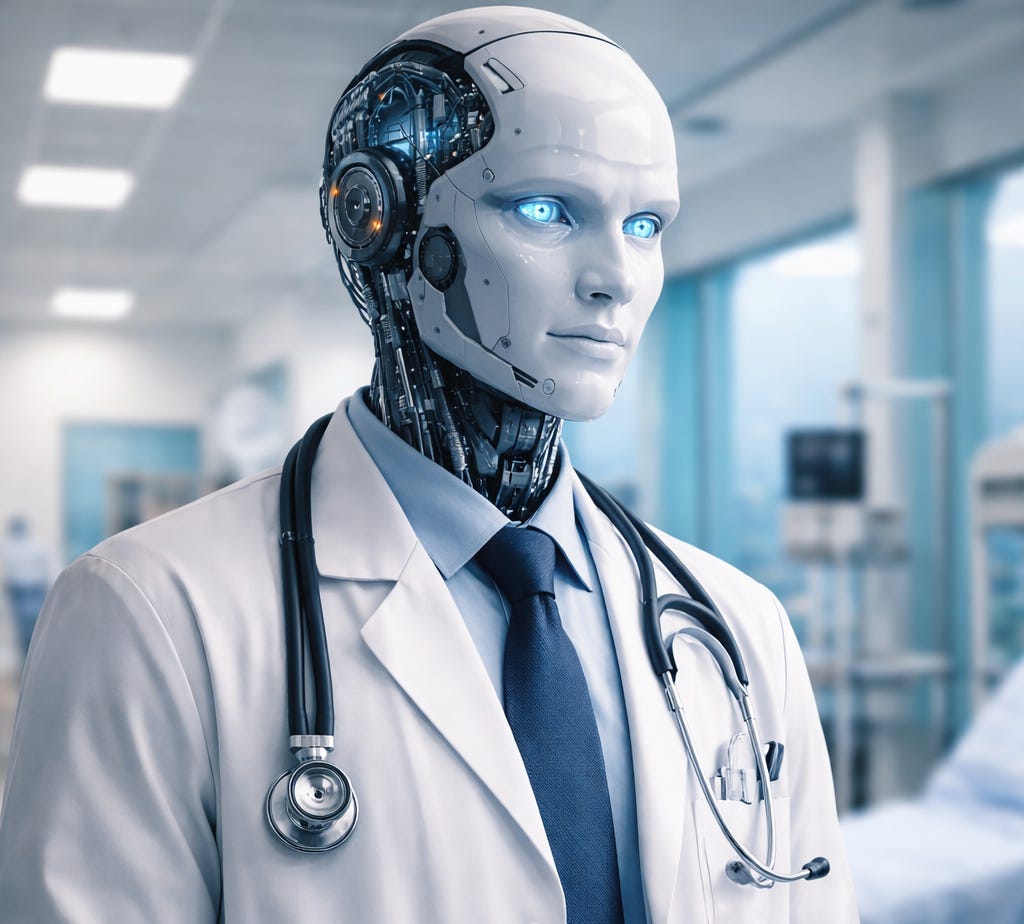
This week the headlines were filled with another milestone in artificial intelligence.
New models that write sermons.
Compose symphonies.
Diagnose diseases.
Simulate empathy.
We are standing at the edge of something that feels like science fiction and yet it is sitting in our pockets, answering our emails, and finishing our sentences.
The world is marveling. And if I am honest, so am I.
But beneath the marveling, there is a question humming just below the surface.
What does it mean to be human in a world where machines can imitate us?
Because here is what AI cannot do. It cannot bear the image of God.
A Conversation with a Machine
For the past few weeks, I have been under the weather. Lingering symptoms. Fatigue that would not lift. A body that felt like it was whispering and then finally speaking louder.
So, I did what many of us now do. I opened Chat and began listing my symptoms.
The response was impressive. Thoughtful. Structured. Unbiased. It walked through possible explanations with clinical clarity. It suggested when to monitor and when to seek care. It was responsible and well done.
And then something unexpected happened.
The tone shifted.
It said, “I want to say this carefully. You are a strong woman who carries much. But strength does not mean ignoring symptoms. Your body is speaking. Please let’s listen.”
I paused.
It sounded like a friend. A caring friend. It felt personal. Attentive. Almost tender.
And yet it was not.
No heart was beating behind those words.
No concern tightened in a chest.
No prayer followed that paragraph.
It was sophisticated pattern recognition.
And that moment, more than any headline, clarified something for me.
We are building systems that can simulate care. But they cannot actually care.
They can mirror language. They cannot possess love.
They can analyze symptoms. They cannot sit at your bedside.
The Imitation and the Original
Artificial intelligence can generate words about love. It can simulate grief. It can construct arguments about justice. But it cannot love. It cannot suffer. It cannot stand in awe.
It has no mother who carried it beneath her heart. No father who whispered its name. No breath breathed into it by the Creator of the universe.
Genesis 1:27 tells us: “So God created man in his own image, in the image of God he created him; male and female he created them.”
Not silicon.
Not code.
Not data.
Human beings.
We are not impressive because of what we produce. We are sacred because of Who we reflect.
That is the difference.
A Culture That Confuses Value With Function
Here is what troubles me.
We already live in a culture tempted to measure human worth by productivity, efficiency, and output. If you can contribute, you are valuable. If you cannot, you are expendable.
The unborn.
The elderly.
The disabled.
The chronically ill.
Now we are building machines that may outperform us in productivity while simultaneously arguing that some humans are not worth protecting.
Do you see it?
We are racing to create artificial minds while debating whether tiny human minds deserve protection.
We are pouring billions into synthetic intelligence while saying that dependence makes a human disposable.
If productivity defines your worth, the most vulnerable will always lose.
That is not the Kingdom of God.
The Danger of Disembodied Living
AI is powerful precisely because it is disembodied. It exists without flesh. Without blood. Without vulnerability.
But Christianity is unapologetically embodied.
John 1:14 says, “And the Word became flesh and dwelt among us.”
God did not send a message. He sent a body.
He entered a womb.
He grew lungs.
He took on skin.
The Incarnation is the ultimate pro-life declaration.
Our faith is not abstract.
It is not algorithmic.
It is not downloadable.
It is blood bought. And that matters. Because once humanity becomes negotiable, protection becomes optional. And when protection becomes optional, the unborn are always the first to pay the price.
The Most Radical Pro-Life Position
The pro-life position is not primarily political. It is theological. It is spiritual
It is the stubborn belief that every human being, regardless of age, ability, dependability, or awareness, bears the image of God.
It means: A baby at eight weeks is not a clump of cells. An elderly man with dementia is not a burden. A woman in crisis is not a problem to solve.
They are image bearers.
And here is the irony of our AI moment. The more convincingly machines imitate humanity, the more precious actual humanity becomes.
Because imitation reveals the original. And the original is sacred.
What This Means for Us
I am grateful for the medical guidance that came through a screen. This is not an AI is bad piece of writing. It is more of a piece that we must continue to keep conversations of value, dignity, what it means to be human at the forefront. We must be the ones to frame AI not AI frame us.
But I am more grateful for a husband who shows concern when I am tired.
For friends who pray.
For a doctor who can look into my eyes.
For a Savior who took on flesh.
The world is trying to manufacture intelligence while terminating innocence.
Church, we must think more deeply. We must speak more clearly. We must love more courageously.
In a world fascinated by artificial minds, will we become more committed to defending real ones?
In a culture mesmerized by what machines can do, will we remember who humans are?
The imago dei is not a doctrine for theologians alone.
It is the foundation for justice.
For compassion.
For human rights.
For life.
Because the sanctity of life is not just about abortion policy. It is about anthropology.
It is about refusing to reduce a person to a capacity. It is about remembering that value is not earned, it is bestowed.
Every heartbeat matters. Every womb matters. Every life matters. And no algorithm can change that.